 DexaFit NY is the testing arm of Prefusion Health. Same team, same clinics.DexaFit NY is the testing arm of Prefusion Health
When people think about aging well, they usually picture a sharp mind, a healthy heart, maybe good skin. Muscle rarely makes the list. But ask anyone who has struggled to get up from a low chair, carry groceries or climb stairs without holding the rail, and they will tell you how much it matters.
Muscle is not just about looking strong. It is the engine behind how you move, how you feel and how independent you stay as the years go by. The tricky part is that you cannot judge it in the mirror or on a scale. Here is why muscle mass matters for healthy aging, why measuring it helps, and how a DEXA scan at DexaFit NY shows you where you actually stand.
Why muscle matters more than you think
1. Strength and independence
Muscle is what lets you rise from a chair, climb stairs, carry bags, play with your grandchildren and get up off the floor. Everyday independence depends on having enough strength to do ordinary things comfortably.
2. Balance and mobility
Stronger muscles support steadier movement and better balance, which matters more every year you want to keep moving with confidence.
3. Metabolism
Muscle is active tissue. Keeping it supports how much energy your body uses day to day, which is one reason knowing your resting calorie burn is so useful.
4. Bones
Muscle and bone work together. Strong muscles load your bones as you move, and bone density is itself an early health marker worth watching.
5. A healthier body composition
What your weight is made of matters as much as the number on the scale. A body with more lean muscle and less visceral fat is in a very different place from one with the same weight and less muscle.
The problem: muscle can quietly fade
Without regular use, muscle tends to decline gradually with age, often so slowly you barely notice. It can happen even when your weight stays the same. You might weigh what you did ten years ago while carrying less muscle and more fat.
That is why the scale can mislead you. It gives you one number and nothing about what that number is made of. It is also why anyone losing weight should ask: am I losing fat or muscle? Dropping pounds is only a win if you protect your muscle along the way.
How to actually measure your muscle mass
The mirror will not tell you. Neither will a scale, or a wrist device that infers body fat from your pulse. The most precise tool DexaFit NY offers is the DEXA body composition scan.
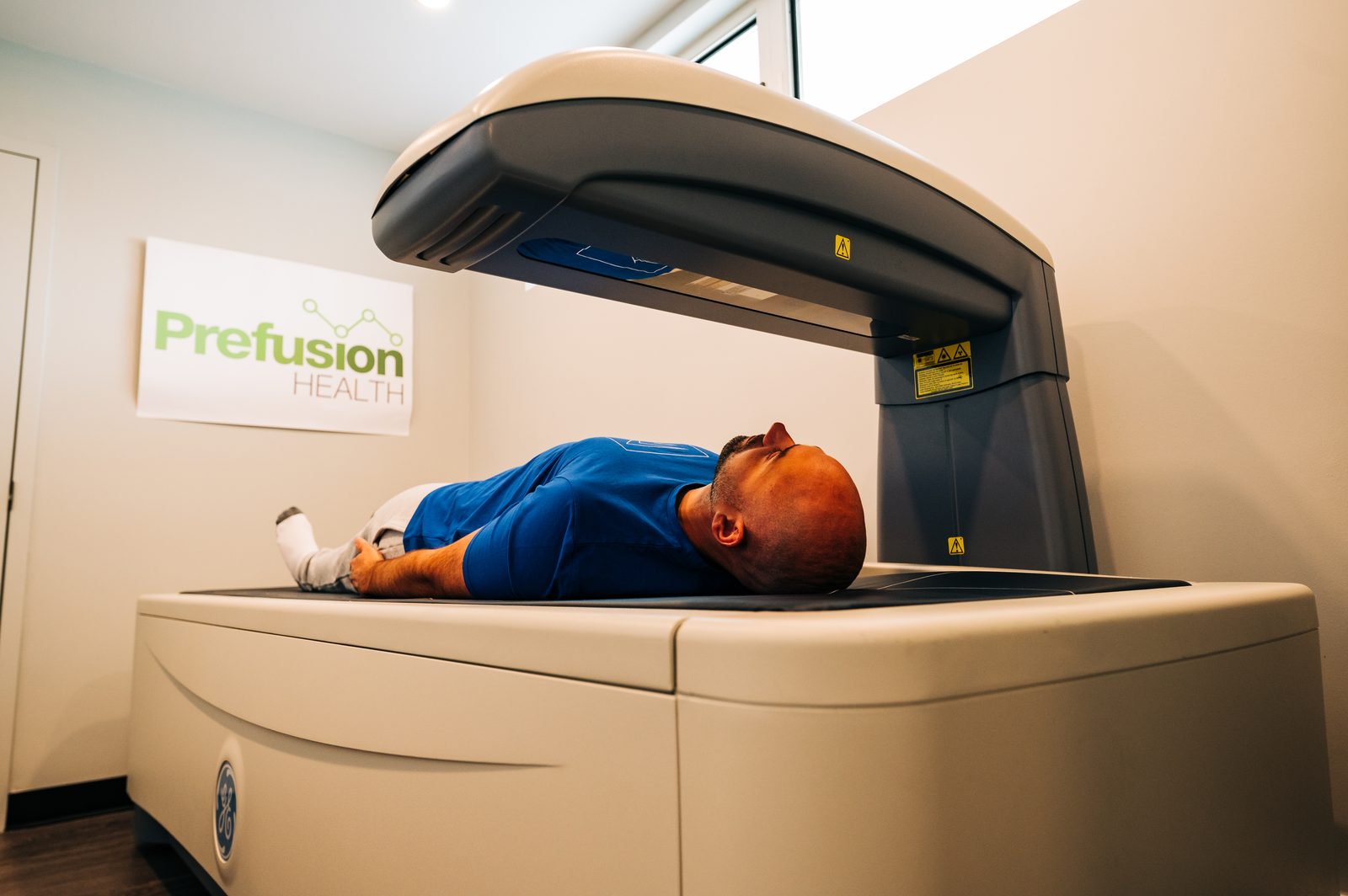
A DEXA scan uses a medical-grade GE scanner, the same kind hospitals use, not a bioimpedance guess. In about seven minutes, fully clothed on an open table, it gives you:
- Body fat, precisely: total and regional fat mass to the gram
- Lean muscle by region: left against right, arms against legs, so an imbalance shows up instead of hiding in a total
- Visceral fat: the fat around your organs, the number most people have never had measured
- Bone mineral density: an early health marker most annual physicals skip, included in the same scan
- A/G ratio: how your body distributes fat between your middle and your hips
Why regional muscle data is so useful
A total muscle number can hide problems. Lean muscle by region shows imbalances, such as one leg weaker than the other, so your training can correct them instead of missing them.
From numbers to action
Knowing your numbers is the first step. Every scan includes a walkthrough of your results in person, and DexaFit NY's partner, Prefusion Health, can turn them into a plan. A scan gives you numbers, but knowing them is not the same as changing them.
You can also pair your DEXA scan with other tests:
- RMR test ($179): measures your resting calorie burn
- VO2 max test ($199): your cardio fitness and training zones
- Optimization Package ($499): DEXA, RMR and VO2 max in one visit
- Prefusion Protocol ($549): a DEXA scan, RMR test, bloodwork panel and in-person review, with a written plan
Tracking change over time
One scan is a snapshot. Repeat scans tell the story. A baseline plus a follow-up every few months, or once a year for general health tracking, shows you the trend instead of a single moment.
That is powerful motivation. One member who rescanned was down 9 lbs of fat and up 7 lbs of muscle, without giving up dessert. On the scale, those two changes would have almost cancelled out. On the scan, they were obvious.
Who might benefit from a DEXA scan?
- Anyone who wants a true picture of their body, not a scale guess
- Anyone starting a fat-loss or muscle-building plan who wants a real baseline
- Anyone who trains hard but is not sure it is working
- Anyone who wants to track visceral fat and bone density
- Anyone who cares about long-term health and wants to measure what is changing
What to know before you go
The scan uses a very low dose of radiation. It is not advised during pregnancy, and if you have a health concern, talk to your doctor before booking.
- Price: $179 per scan, with your results reviewed in person
- Payment: HSA and FSA eligible, private pay with no insurance paperwork
- Locations: New York City, Bellmore and Stony Brook
- Reputation: rated 4.9 on Google
The bottom line
Healthy aging is not only about adding years. It is about keeping the strength and independence to enjoy them. The first step is knowing what your body is made of. Book a DEXA scan at DexaFit NY and measure it, do not guess it.
Frequently asked questions
What does a DEXA scan measure?
Total body fat, visceral fat, lean mass by region, bone mineral density and your overall body weight.
How long does a DEXA scan take?
About seven minutes, and a team member reviews your results with you straight after.
Is a DEXA scan safe?
It is non-invasive and uses a very low dose of radiation. It is not advised during pregnancy.
How often should I get a DEXA scan?
It depends on your goals. A baseline plus a follow-up every few months, or once a year, tracks progress well. Athletes may test more often.
Why not just use a scale?
A scale cannot separate fat from muscle, and it cannot see visceral fat. A DEXA scan can.
 Let your data do the work →
